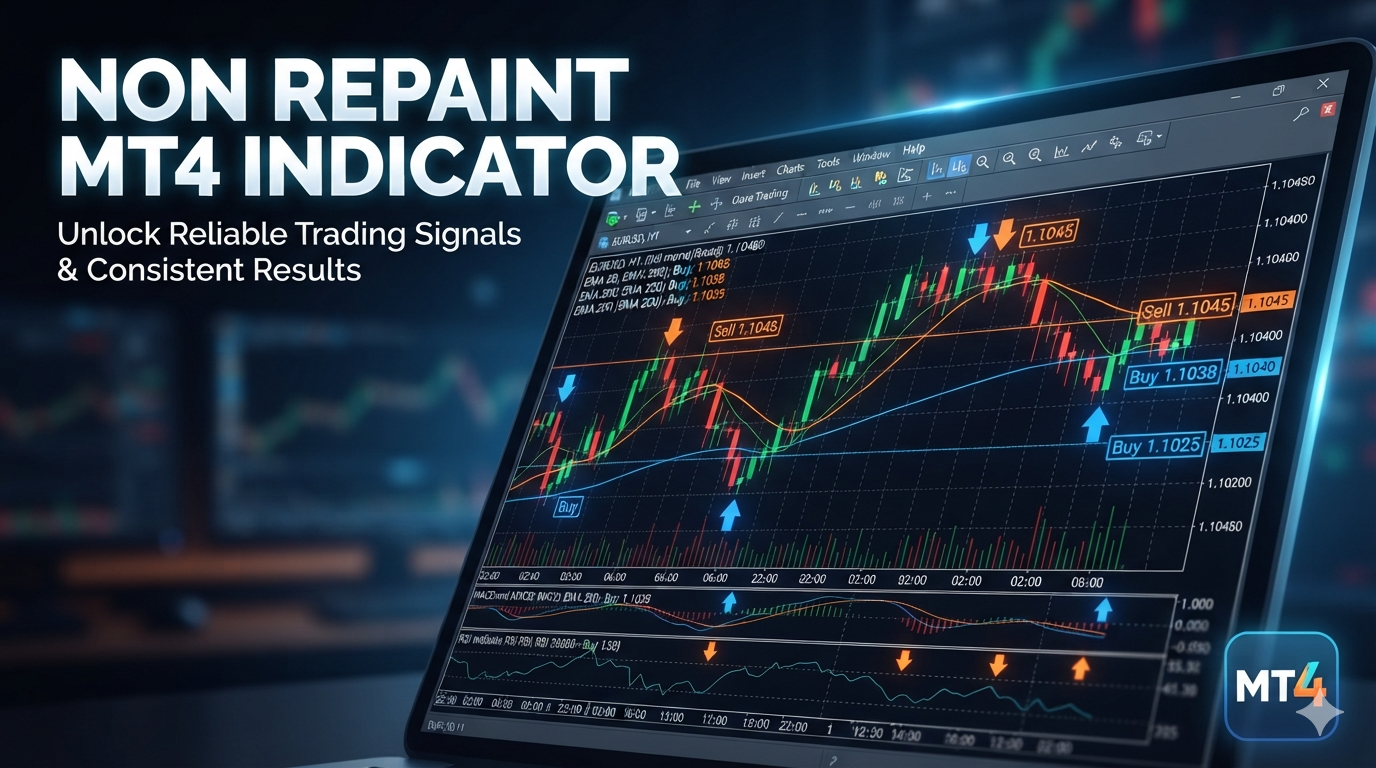
If you’ve spent any real time in the charts, you’ve probably been burned at least once by a signal that looked perfect — until it quietly rewrote itself five minutes later. That’s the repainting problem, and it’s one of the most frustrating traps in retail trading. This article breaks down what a non-repaint indicator for MT4 actually is, why it matters more than most beginners realize, and how the BD Indicator was built specifically to solve this problem using AI-powered analysis.
What Does “Non Repaint” Actually Mean?
A repainting indicator changes its past signals after the fact. You’ll see an arrow form on a candle, act on it, and then come back later to find that arrow has vanished or shifted to a different bar entirely. This isn’t a glitch — it’s usually baked into how the indicator’s underlying formula recalculates historical data as new price bars close.
A non-repaint indicator, by contrast, locks in its signal the moment it forms. Once an arrow, alert, or color change appears on your chart, it stays exactly where it is. There’s no retroactive editing, no “well actually” moment three candles later. This distinction sounds small on paper, but it’s the difference between a tool you can genuinely backtest and one that will lie to you about its own track record.
Why Repainting Is So Dangerous for Live Trading
The real damage from repainting doesn’t show up in real time — it shows up in your backtest results. A repainting indicator can look like it has an 85% win rate when you scroll back through historical charts, simply because it’s cheating by adjusting signals with the benefit of hindsight. Trade it live, though, and that win rate often collapses, because in real time the indicator doesn’t have future price data to “correct” itself with.
This is exactly why experienced traders treat forex indicators with a healthy dose of skepticism until they’ve verified the non-repaint claim themselves. It’s also why a growing number of traders specifically search for tools built around MT4 indicators that state their repaint behavior upfront rather than burying it in the fine print.
Introducing the BD Indicator
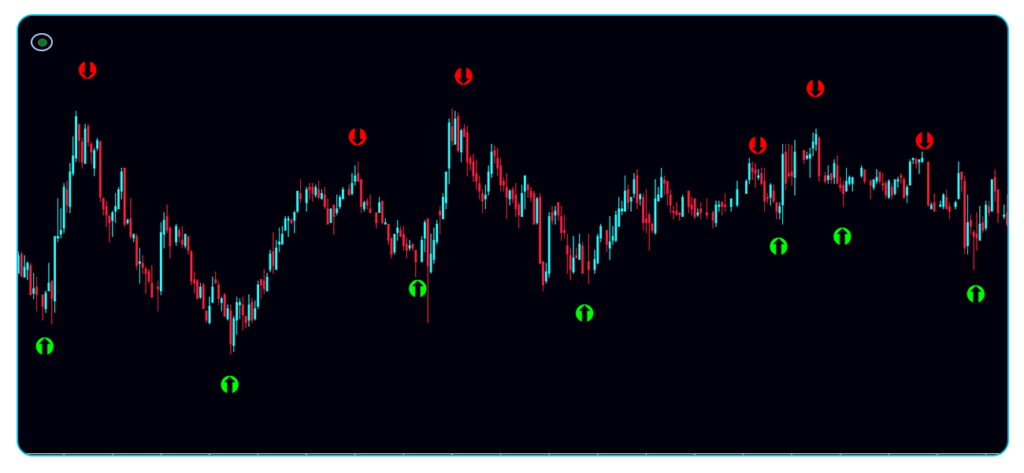
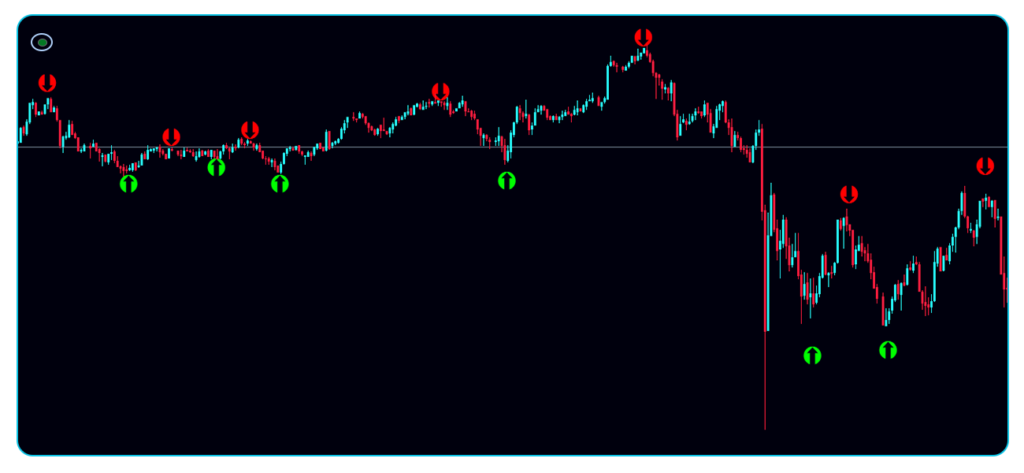
The Binary Diaries Indicator was designed with this exact pain point in mind. Rather than relying on a fixed, rigid formula that recalculates as new candles form, it uses neural network-based analysis to generate signals that are locked in the moment they appear on the chart. Once you see an arrow, that’s the call — no revisions, no disappearing acts.
What makes the BD Indicator stand out among best forex indicators currently available for MT4 is the way it processes market information. Instead of leaning on a single data point like price alone, it factors in price action, volume, and broader market sentiment simultaneously. The AI layer underneath is what allows it to weigh these factors dynamically rather than applying the same static rule to every market condition.
Clear Visual Signals Without the Guesswork
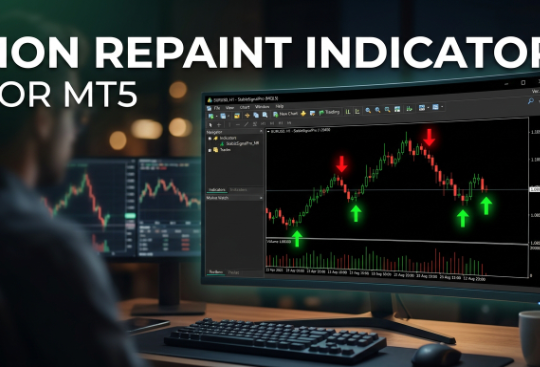
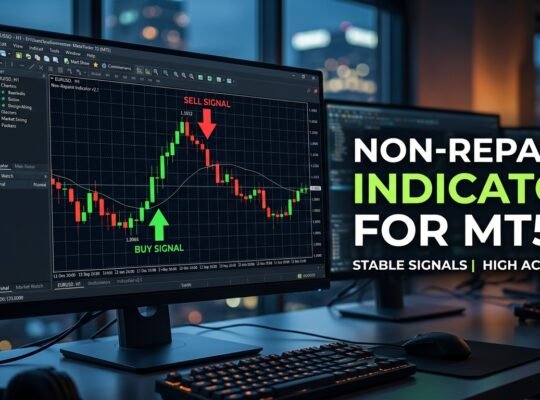
One of the more practical touches is how the BD Indicator communicates its output. It doesn’t bury insights in a sub-window full of squiggly lines you need a manual to interpret. Signals appear directly on the price chart as simple up or down arrows, giving you an immediate visual read on potential direction without cross-referencing three other windows.
For traders who also lean on classic tools like the moving average or RSI, the BD Indicator’s arrows work well as a confirmation layer rather than a replacement. You get the AI-driven read alongside the traditional technical picture, which tends to produce more confident entries than relying on any single tool in isolation.
Alerts That Actually Reach You
The BD Indicator also handles notifications in a way that respects how most people actually trade — which is to say, not glued to a monitor for eight hours straight. Alerts fire through both the MT4 platform itself and email, so a signal forming while you’re at work or asleep doesn’t just evaporate unnoticed. This matters more than it sounds; missed signals are one of the quieter reasons traders underperform their own backtested results.
How the AI Layer Actually Works
The mechanics behind the neural network are proprietary, which is standard across most serious indicator development — nobody hands over their entire model architecture for free. What’s known is the general approach: the system ingests historical and live price data, identifies recurring patterns and correlations, and continuously refines its weighting of those patterns as fresh data comes in.
This is a meaningfully different approach from older-generation tools built on stochastic oscillator logic or fixed-period moving averages, which apply the exact same math regardless of whether the market is trending, ranging, or whipsawing through news events. An adaptive model, in theory, should handle regime changes more gracefully than a static formula — though this is precisely the kind of claim that deserves independent verification rather than blind trust.
Why Adaptability Matters More Than Raw Complexity
There’s a tendency in the indicator space to equate “AI-powered” with “automatically better,” and that’s worth pushing back on gently. Complexity isn’t the goal — adaptability is. A neural network that continuously updates its pattern recognition as market conditions shift has a structural advantage over a static formula, but only if that adaptation is genuinely improving accuracy rather than just adding noise. This is where backtesting your own data, on your own pairs and timeframes, becomes non-negotiable.
Practical Ways Traders Are Using the BD Indicator
Retail traders working across forex trading, equities, and crypto markets have started incorporating tools like this less as a standalone signal generator and more as a decision-support layer. The pattern that tends to work best looks something like this: the AI arrow flags a potential move, the trader checks it against support and resistance or a secondary indicator, and only then does the trade get sized and placed.
This layered approach solves one of the biggest psychological traps in trading — emotional overreaction to price movement. When a signal is generated by a systematic process rather than gut feeling in the heat of the moment, it’s easier to stick to a plan instead of chasing candles.
A Note for Newer Traders
If you’re still building your chart-reading instincts, watching how the BD Indicator’s signals play out over time — without necessarily trading every single one — can function as a genuinely useful education tool. You start to notice which market conditions produce cleaner signals and which produce choppier, less reliable ones. That pattern recognition transfers directly into your broader trading skill set, well beyond this one tool.
Best Practices Before You Trade It Live
No indicator, AI-powered or otherwise, should be the sole basis for a trading decision. Risk management still comes first — stop-losses, sensible position sizing, and a max-loss threshold per trade all remain non-negotiable regardless of how sophisticated the signal generation is behind the scenes.
Before committing real capital, run the BD Indicator through a proper backtest across multiple market conditions: trending periods, ranging periods, and high-volatility news windows. A tool that performs well across all three is a very different proposition from one that only shines in calm, trending markets. It’s also worth reviewing a transparent testing methodology like the one outlined in how we test indicators and robots, which walks through the kind of rigor that separates a genuinely useful tool from marketing hype.
Pairing the BD Indicator with a secondary confirmation tool — rather than trading its arrows in total isolation — tends to produce more consistent results. Traders who’ve spent time with MT4 expert advisors already understand this principle well: automation and AI-assisted signals work best as part of a system, not as a magic bullet on their own.
Where This Fits in the Bigger Picture
MetaTrader has spent two decades as the backbone of retail forex trading, and the tools built for it have evolved substantially in that time — from basic moving average crossovers to today’s AI-assisted, adaptive systems. The BD Indicator sits at the newer end of that spectrum, and it’s a reasonable bet that AI-driven, non-repainting tools become the norm rather than the exception over the next few years as machine learning becomes cheaper and more accessible to independent developers.
That said, the fundamentals haven’t changed. A non-repaint indicator only earns its keep if it’s paired with sound risk management, realistic expectations, and a trader willing to verify its claims rather than take them at face value. The technology is a genuine step forward — but it’s still a tool, not a substitute for discipline.
Frequently Asked Questions
Is the BD Indicator suitable for beginners? Yes, though beginners get the most value out of it by treating it as a learning aid first and a signal generator second — observing how its arrows correlate with actual price movement before trading it live.
Does the BD Indicator work on other platforms besides MT4? It’s built specifically for MT4, though the underlying principles behind AI-driven, non-repainting signal generation can be applied across other platforms and asset classes, including stocks and crypto.
How do I confirm an indicator is truly non-repainting? Run it forward on a demo account in real time and compare the live signals against what shows up when you scroll back through history later. If the arrows match exactly with no shifting or disappearing, the non-repaint claim holds up.
Should I trade every signal the BD Indicator generates? No single indicator should be traded blindly. Cross-checking signals against support and resistance, volume, or a secondary indicator like RSI produces far more consistent long-term results than trading arrows in isolation.
Final Thoughts
A genuinely non-repaint indicator for MT4 is rarer than the marketing around most trading tools would suggest, and that scarcity is exactly why it’s worth doing your homework before trusting one with real capital. The BD Indicator’s combination of locked-in signals, AI-driven pattern recognition, and multi-channel alerts makes it a compelling addition to a trader’s toolkit — provided it’s used the way any serious tool should be: backtested thoroughly, paired with sound risk management, and treated as one input among several rather than a crystal ball.
If you’ve tested the BD Indicator yourself, share your experience in the comments below — real trader feedback is worth more than any marketing copy. And if you’re building out your indicator toolkit further, take a look at our guides on forex signals for another layer of confirmation worth exploring.
BUY HERE:
To get the indicators, visit here: